<start>FSM Examples...Bit Bus
A "bit bus" example FSM is invented and left on the table for discussion.
This state machine diagram is made up for analysis, discussion, criticism.
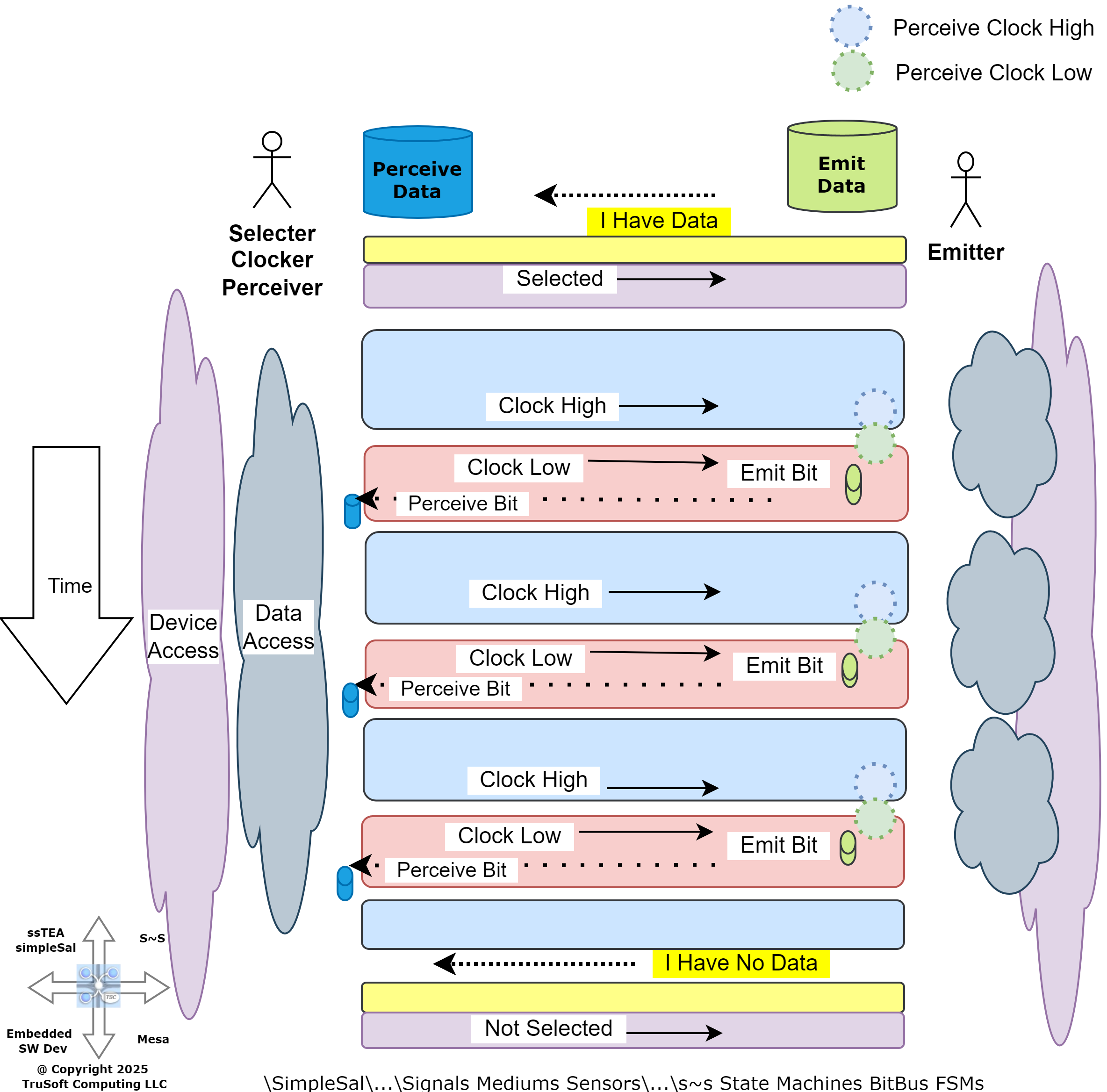
Transferring data through a bus requires two participants: a bus master (some thing in charge of the sequence), a bus servant (some thing acting under the direction by a master). The Bit Bus definition of “read” and “write” describes the result of the operation, an operation that is by definition always reading one device and writing to another device. That is what a bus does.
The Data signal is being emitted by the writer and perceived by the reader. When a master emitted a signal to a servant, the servant perceives a signal.
When a master perceives a signal from a servant, the servant emitted a signal.
Bus Control With Selecter and Clocker
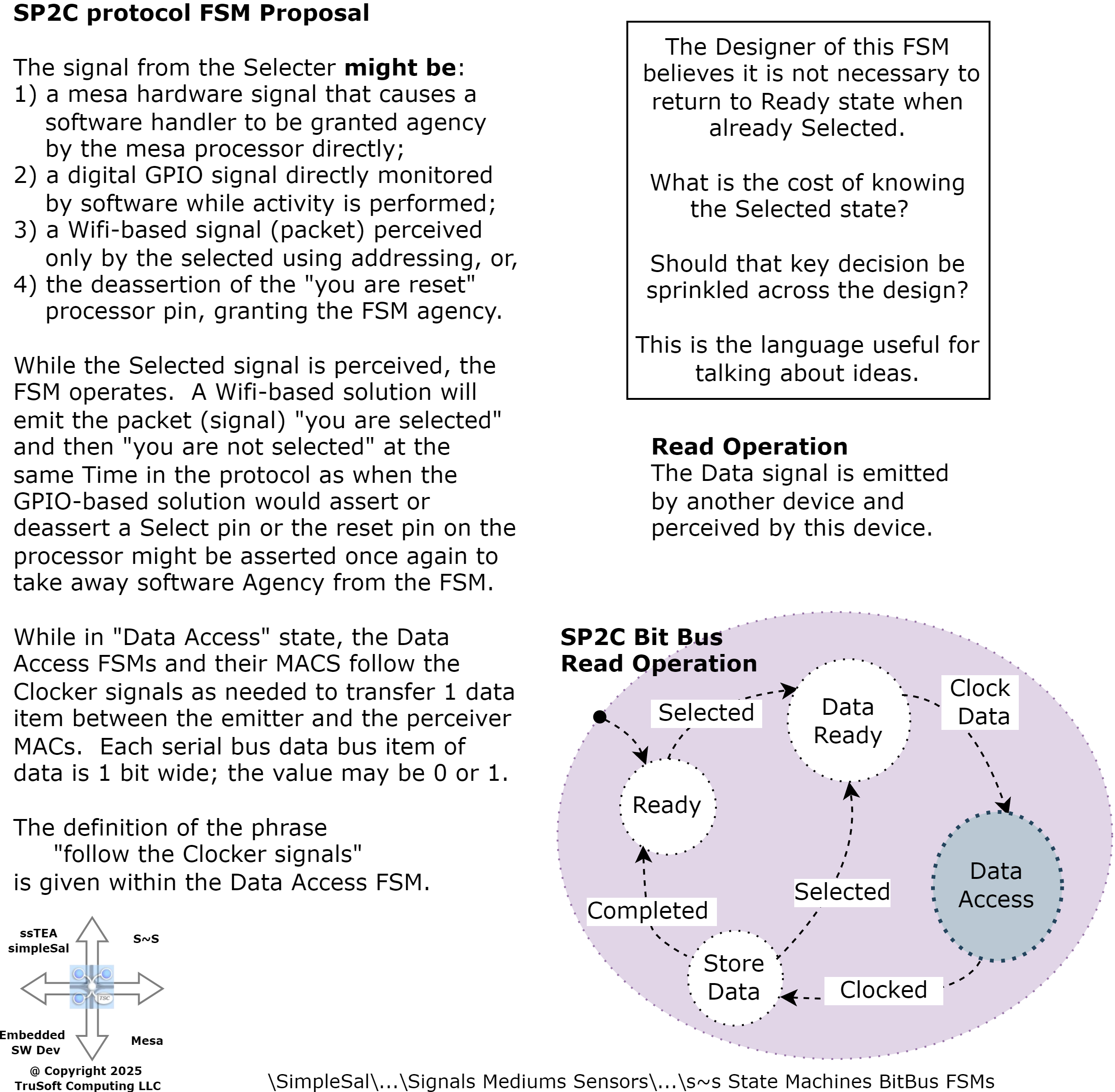
The Bus Master Selected This Device, Now What?
These FSMs may be active independently and simultaneously given two Data signals. Both of them depend on Selected and the Clock; each owns a signal.
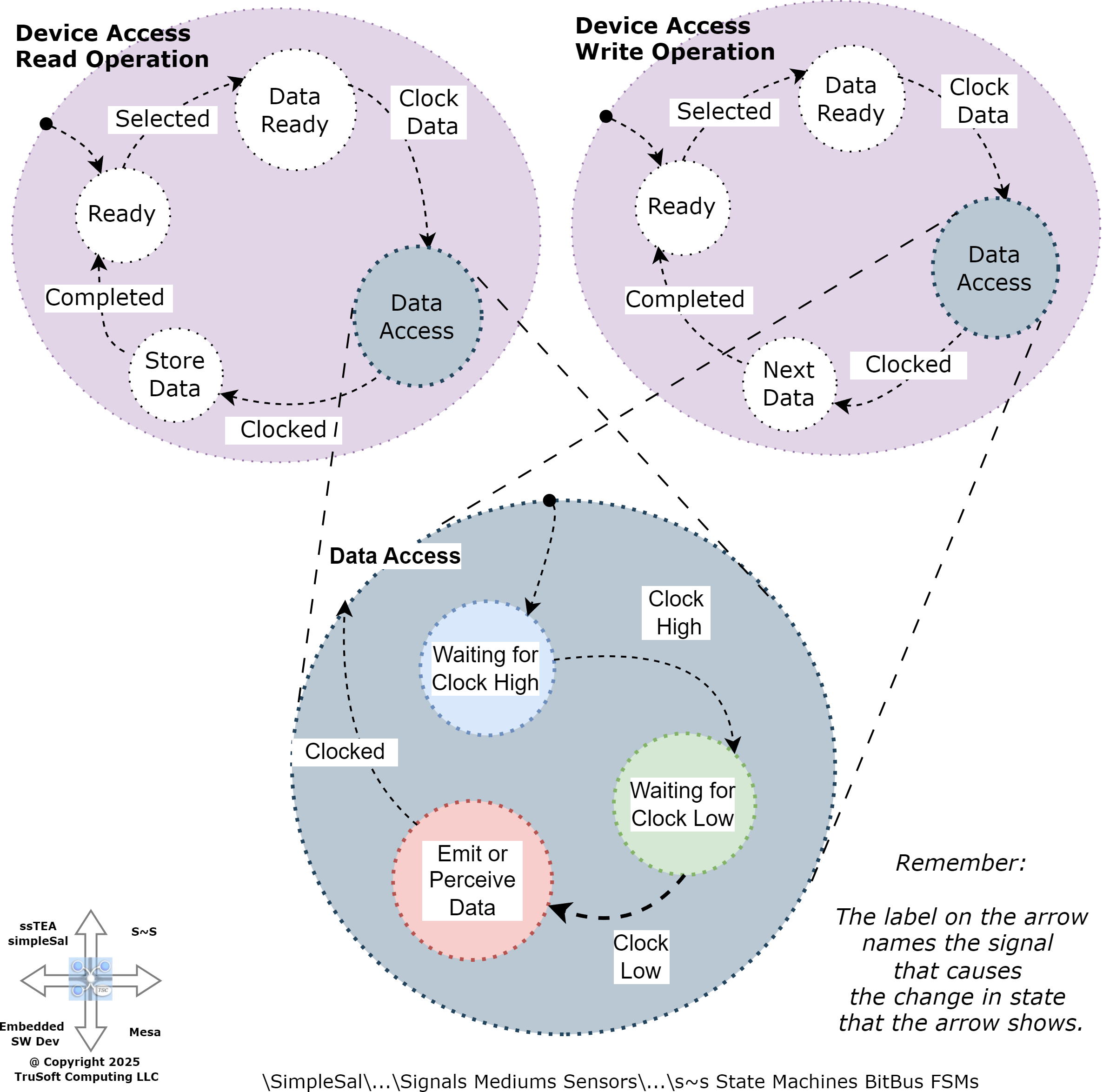
Here is a different view, showing the interactions between devices with more data access details. The producer of a signal knows the Time it was produced, the signal traverses Time and Space, the perceiver of a signal knows the Time it was perceived. Signal Algorithms must consider there are two Time domains.